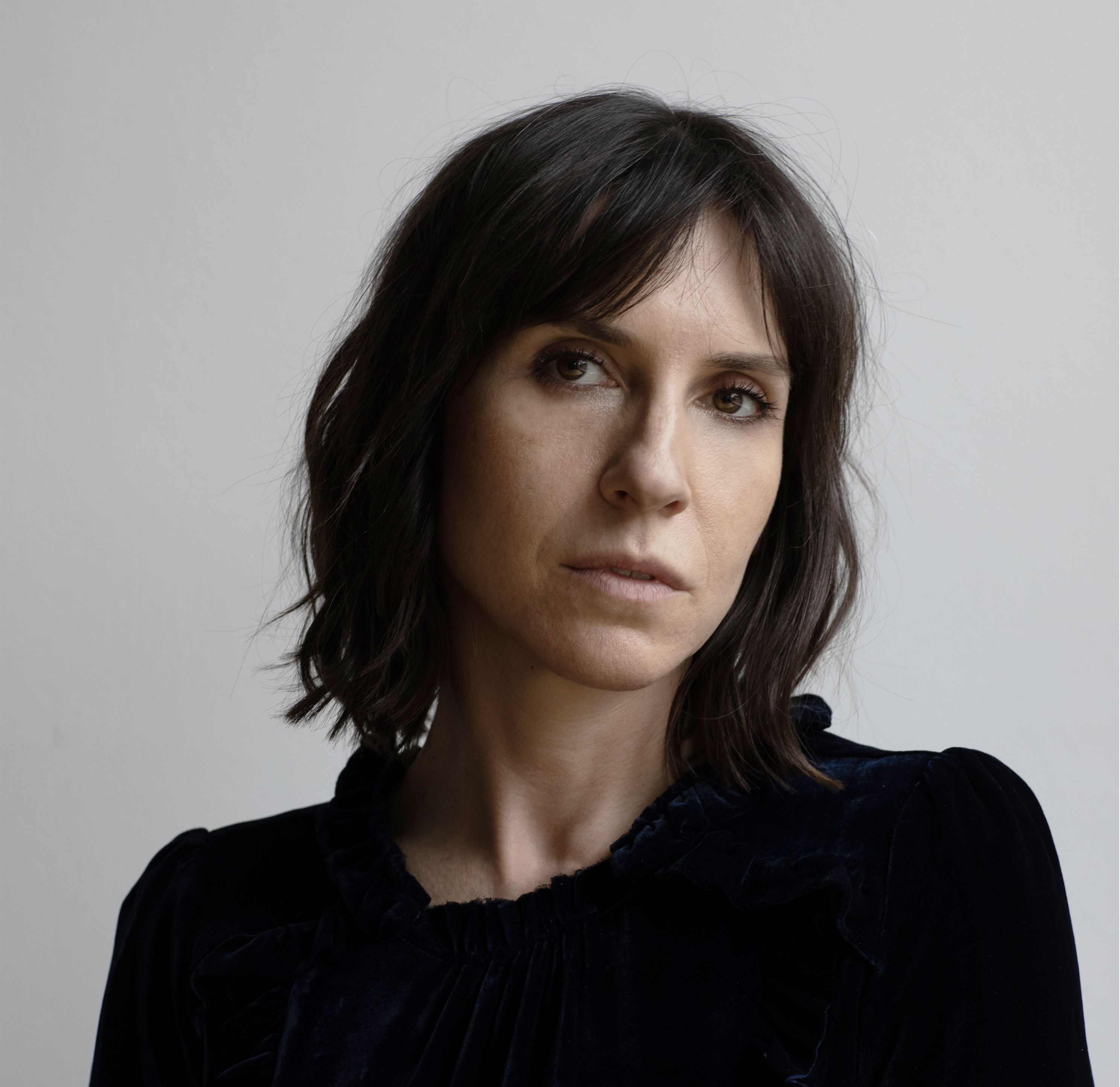
Vanessa Beaumont studied Classics at Oxford University before joining Short Books, the independent publisher in London, where she was Commissioning Editor for 8 years, editing both fiction and non-fiction. She co-ran the literary agency Prentice Beaumont with Kate Prentice, before deciding to take the reckless decision to embark on a novel. She lives between West London and Northumberland and is married with three children. Her debut novel, The Other Side of Paradise, will be published by Oneworld in May 2024.
Q & A
Why did you decide to write this story?
I had been thinking about a non-fiction idea, drawn to a pair of De Laszlo portraits I had sat beneath in a beautiful dining room in Wiltshire; of an American girl who had married into an English family at the turn of the century, painted as a woman and mother of two little boys, and then of her mother, a formidable grand dame of a lady. In reality the real story wasn’t quite right and I think in my heart of hearts I wanted an excuse to push myself to write a novel. So I began to think about how I would like that sort of a story to unfold – what would happen to this girl of perfect prospects but fragile self-knowledge, whose money was used to great effect, but whose happiness was not a thing of consideration at all…. I knew that the novel would have duty and inheritance and the pull of other desires swirling around in it, that she would become a mother of two boys that she adored, but in a complicated, empty marriage… and so the ideas kept on coming.
The book covers a large period of time
– how long did you spend writing it?
I wrote the first draft over a period of about 8 months, although in reality I had been reading around the period for about four or five months before. I do remember the first time I came up with the kernel of the story of the novel – I was sitting in the London Library and I thought to myself, just write an outline of how you see your character’s story unfolding. When I looked up again from my laptop three hours had passed. And so it began….
How did you stay motivated?
Good question! I am quite single-minded when it comes down to it, so once I had committed to the idea of writing this novel, I just kept at it, as resolutely as was humanly possible. I think at each stage of the process there was a goal to strive for – initially it was to write a whole draft, then it was to get an agent, then to get that first re-write ready for my agent and on time, and so on. So at each point the elusive goal was just out of reach, which spurred me on. I also found the best piece of advice on writing for me, very simple and to the point – only three words long. Bum On Seat – much like the Lottery mantra, You have to be in it to win it, which always got me, Bum on Seat makes the same blazingly obvious point. If you’re not actually sitting down and writing each day, the book is not magically going to appear. Talking about it or worrying about it is just another form of procrastination! So put that bum on the seat and write.
Why did you choose the Riviera as one of your main settings?
I knew I wanted to find a way to contrast the sense of duty manifested in a big house like Harehope and all the expectations that went with that, with another way of life. The burgeoning world of the Riviera in the mid 20s was the perfect foil – it was an unexplored place in many senses, where the rules did not necessarily apply and where someone like Jean could come into contact with a world and a set of characters that she would otherwise not have met. I also know the South of France extremely well, having been going there since I was tiny so I could bring to mind the colours and sounds, the pine trees and cicadas, that coast, just by closing my eyes. It’s a place I love which made Jean’s relationship with it easy for me to imagine and write.
Is Harehope based on a real house?
I would say that Harehope is an amalgamation of lots of different houses, some real, some fictional. I set it in Northumberland in a sort of hybrid place that combined dramatic moorland and the river, both of which I know well from our home there and made describing it and feeling it relatively easy. Northumberland has a majesty and a breadth of sky that struck me when I first went there twenty years ago and still gets me now. Although Jean has a conflicted relationship with Harehope, I also wanted her to be captivated by its majesty and the power of the seasons there and to grow to respect it, even if she did not love it for what it represented to her.
In terms of how a house like Harehope might run, and how Jean as it’s mistress might feel, I did a lot of research into the practicalities (plumbing, electrics, staff, requisition during the second world war etc), but there is also such a rich seam of fiction to mine when it comes to this period too, as well as some of the practicalities I am aware of from personal experience! Also I was very drawn to the idea of the house as almost a character in itself –– both from my own experience and from so many of my favourite novels.
Why do you think the Second World War holds such power as a backdrop for writers?
My novel actually begins in the aftermath of the First World War, and that was a large part of my creation of the character of Edward Warre, Jean’s husband; his complexity is really a direct result of the Great War and its impact on men of his generation – too young to have fought themselves, and always somehow overshadowed by the better, braver, and now dead and forever immortalised generation that preceded them, in his case his far more brilliant brother Charles who should have been in charge. This mentality in many ways created the Bright Young Things of the 20s, youth desperate to escape the guilt at being useless spectators to the unfathomable loss of 1914-18. I always knew somehow that Edward’s character would not be able to prove himself when the next war came around – and it is his eldest son who must take up the mantle and is so desperate to fight when his time comes in 1943.
The Second World War, and particularly the collective impact it had on the British people, is endlessly fascinating – I think the fact that it is relatively close history (both my parents were born in the war, one grandfather fought, the other was a scientist working on radar, so my link is so close) is a huge part of that impact. To imagine the things that were endured on such a scale – impacting both big picture: will you make it through the night in the Blitz? Will your sons come back alive?, to the small picture: the rations and the daily grind and the tedium of blackouts and the disruption to daily life and the running of houses like Harehope – makes it such a rich tapestry to imagine and to build on.
Can you tell us about your writing process?
I try to be as disciplined as possible, going to the same place (my desk, now I have an office at home, or the London Library in St James’s for somewhere out of home), at the same time every day. First I spend a couple of hours at my computer on the Northumberland part of my life and the worst of the niggling admin/ household/kids stuff that is imminent and would stop me focussing, and then get writing at 11 and do as long as stretch as my day/external factors will allow! Ideally working at it for four hours, and then going back to admin at the end of the day. The most key thing is to put my phone away although I can’t do that as easily as I would like, with calls from school coming at a worrying frequency to tell me that one or other of my sons has bumped his head in a game and an ice pack is being administered. Also, if I am having a bad day, and really struggling to create or write much, I make myself edit or go back over something I’ve worked on the day before. This seems to psychologically break the lock and feels like progress, even if it’s incremental.
Are you working on a new novel?
Yes, I am. It is also period, beginning in the 1930s but mainly in the 40s-60s, and is the fictionalised account of real people, four women all married to the same charismatic, complex (infamous!) man, so has required a lot of research too, which I have enjoyed immensely. I think the common thread that links the two novels is really marriage and relationships – the question of whether you ever really know who you are married to… Plus it has lots of complex, complicated but also compelling characters to draw out.
 VANESSA BEAUMONT